
The process
How Anchor works
Three inputs go in. One clear read on each person comes out, written for the manager who has to act on it. Not a dashboard. A plan.
Most retention tools hand HR a number and call it insight. A 7.2. A red cell on a heatmap. Then the manager, the one person who can actually change anything, is left to guess what it means for the people on their team.
Anchor works the other way around. It reads one person at a time and writes their manager a plain, honest picture of where that person stands and what to do next. The survey is just the instrument. The person is the point.
The flow
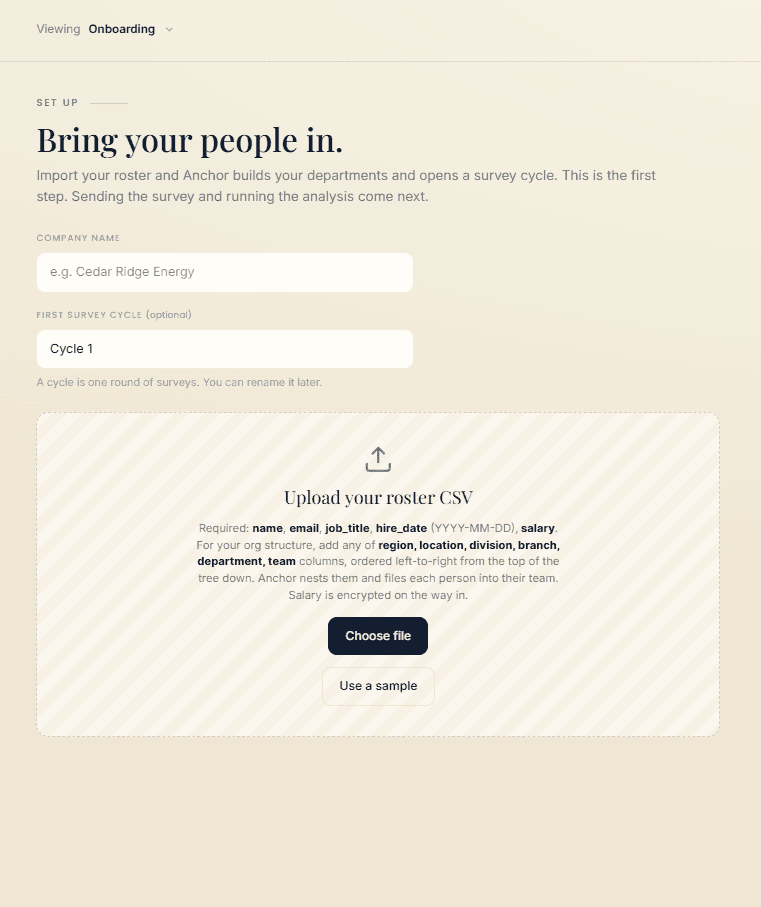
Onboard
HR provides the roster once. Name, role, manager, hire date, the basics. That single source sets who reports to whom and how long they have been here, so nothing downstream rests on a guess.
Then each person gets a private link that belongs to them alone, opened on their own phone, with no app to install and no portal to learn. The employee answers a survey about their experience, roughly 20 to 30 minutes, and most finish sooner. Their manager answers a parallel one about that same person. New hires also take the personality assessment once. It is never repeated.
No shared forms, and no wondering who actually filled it out: the system knows who is answering before it shows the first question.
Analyze
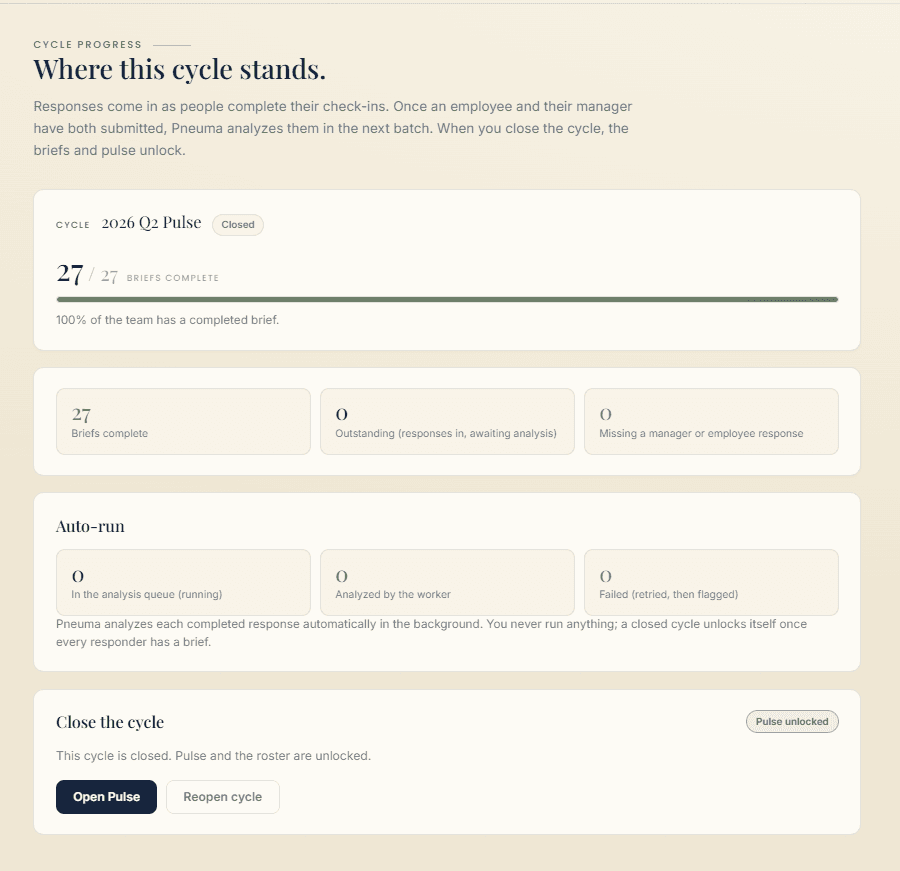
Once a person has all three inputs in, Pneuma writes a single retention analysis for that one employee. Their own answers. Their manager’s answers. Their personality profile.
It is written for the manager who will sit across from that person on Thursday. The language is plain. The meaning comes before the measurement. And every read is grounded in what this person actually said, not in how they stack up against a benchmark.
Act
Every analysis ends with the moves for this quarter. The one move that matters most, the specific things to do, and the words to do them with.
This is the part other apps leave out. Anchor names the problem and then names the response. No flag without a next step. No insight without a script. The analysis is a plan, and it tells the manager what to do Monday morning.
How often
Anchor runs in cycles, three times a year, about once every four months. Each cycle is a fresh read on every person, so a manager is not working off a snapshot that went stale months ago. People change. The picture should keep up.
Pricing is published on the pricing page.
What you get
What lands on the manager’s desk
One document, per person. Here is a real one, section by section.
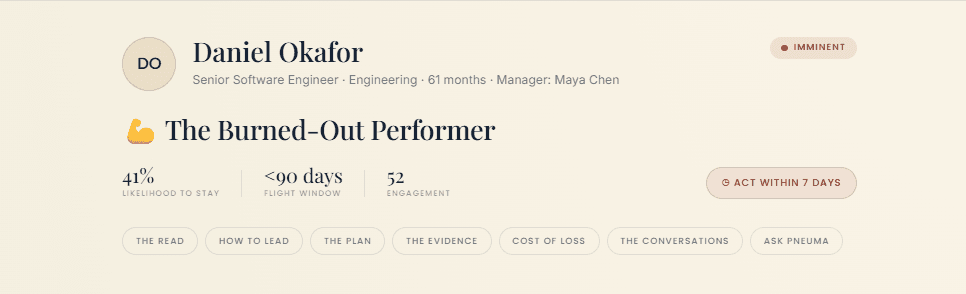
A sample brief. The employee is fictional; the format and the analysis are exactly what Anchor produces.
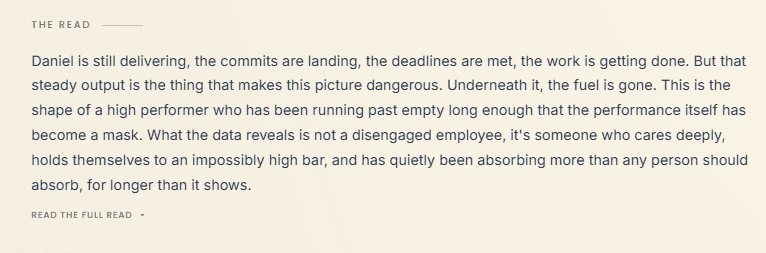
The honest read.
Where this person actually stands right now, in plain words. What is working, what is quietly slipping, and what it means for them specifically. A picture of one person, drawn from their own answers.
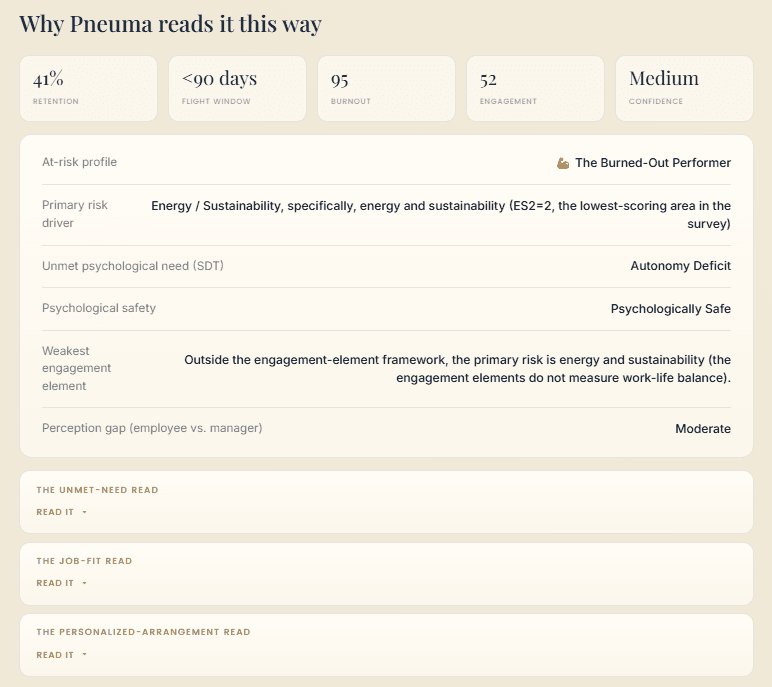
The gap between two views.
The employee answered. Their manager answered the same ground. The analysis shows where the two views line up and where they part. A manager who believes things are fine, and an employee who has stopped saying otherwise: that is where good people are lost. Anchor finds those places first.
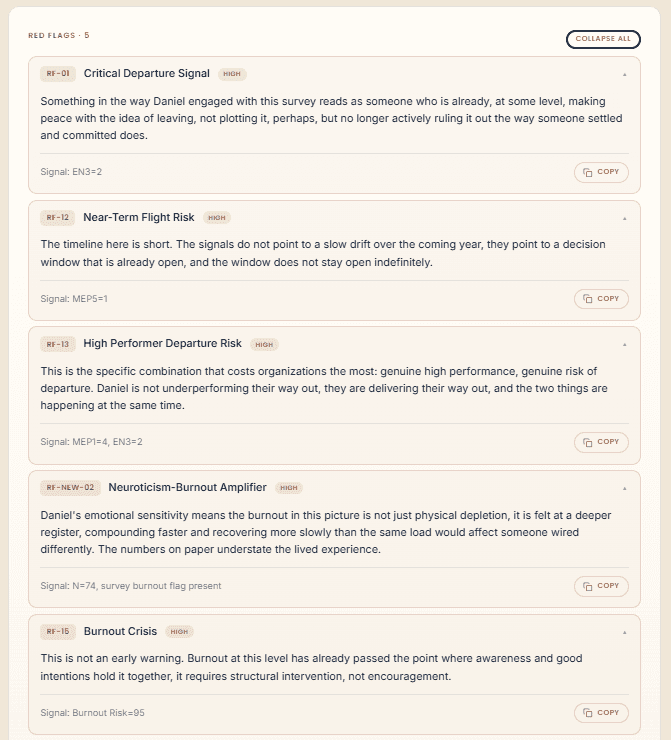
Who you could lose, and when.
The next ninety days, and the next year to two. So you know the difference between someone you could lose this quarter and someone drifting slowly toward the door, and you treat them differently.
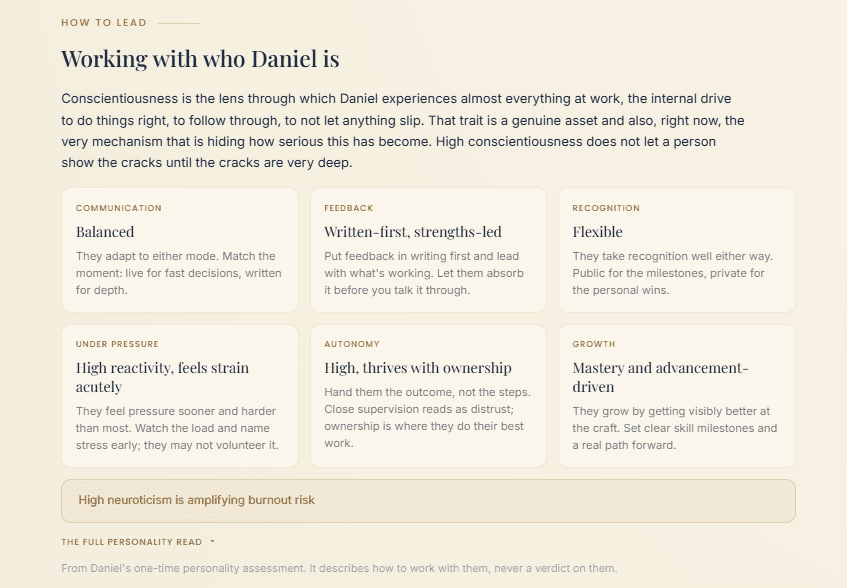
How to reach this one person.
The same words land differently on different people. One employee needs it straight; another needs a minute to think before the conversation starts. Anchor uses the one-time profile to shape the approach, so you are not guessing at what will land.
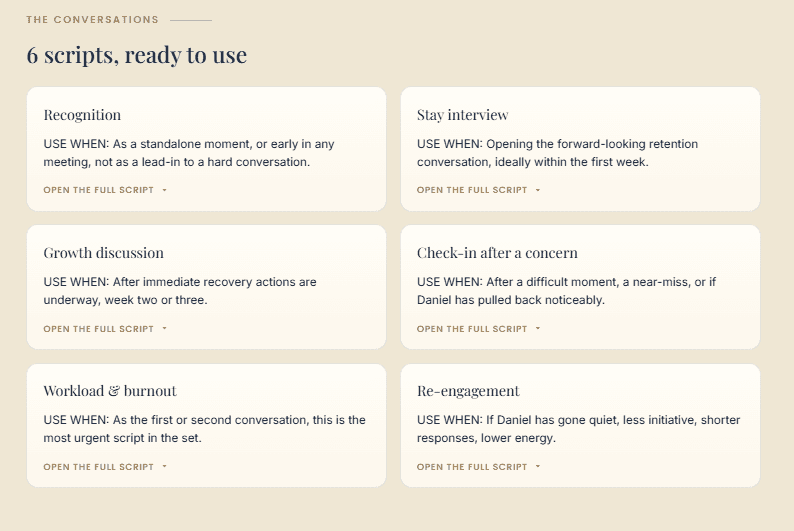
Six conversation scripts.
Actual words for the conversations that matter. What to open with, what to ask, what to avoid. When you know something is off but freeze on how to raise it, you get the exact language to start.
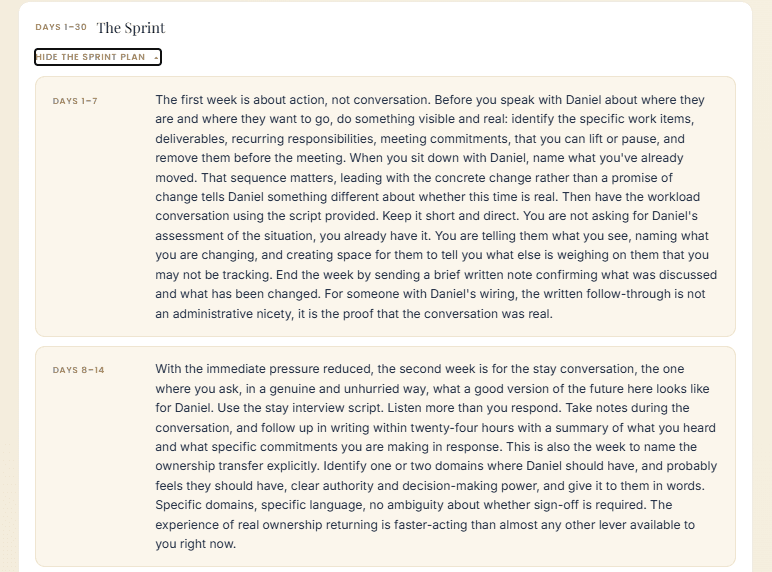
The quarter’s plan.
A short list of concrete moves for the next ninety days. The point is not to admire the problem. The point is to do something about it while there is still time.
Before the conversation
Pneuma Whisper: the questions you didn’t think to ask
A finished plan still leaves a manager with a hard conversation to have. Pneuma Whisper, which a manager opens on the brief as Ask Pneuma, is the part that gets them ready for it. It reads the same analysis sitting in front of them and quietly raises the questions a manager might not have thought to ask, before they walk in.
It hands them no new task and no second dashboard. It works only from the plan they already have, points to the place that deserves another look, and helps them go in clearer. The manager still owns the conversation. Whisper just makes sure they have thought it all the way through.
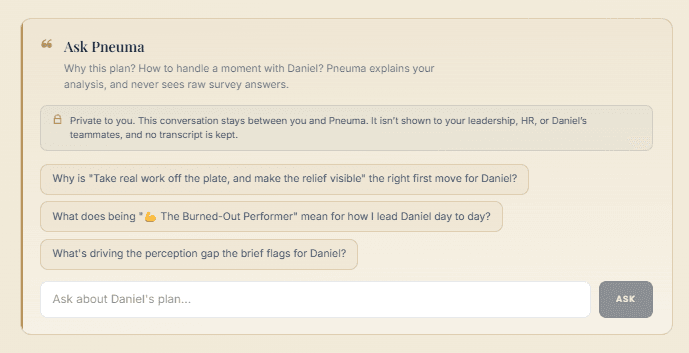
Ask Pneuma: the manager’s private line to the analysis. Nothing here is shown to leadership or HR, and no transcript is kept.
Your most seasoned managers already do this in their heads. Whisper gives every manager the same head start.
The whole operation
One brief per person, and the view above them all
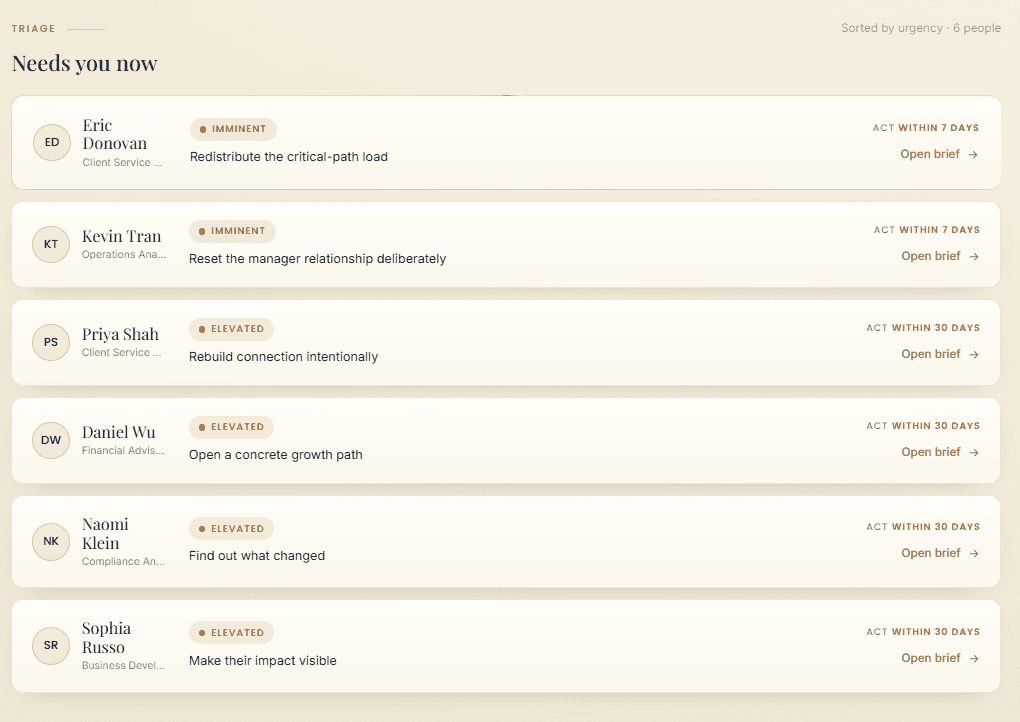
The same reads roll up. A manager sees who needs them this week. Leadership sees the shape of the risk in aggregate, with no individual names or scores. And the next cycle measures whether acting actually worked.
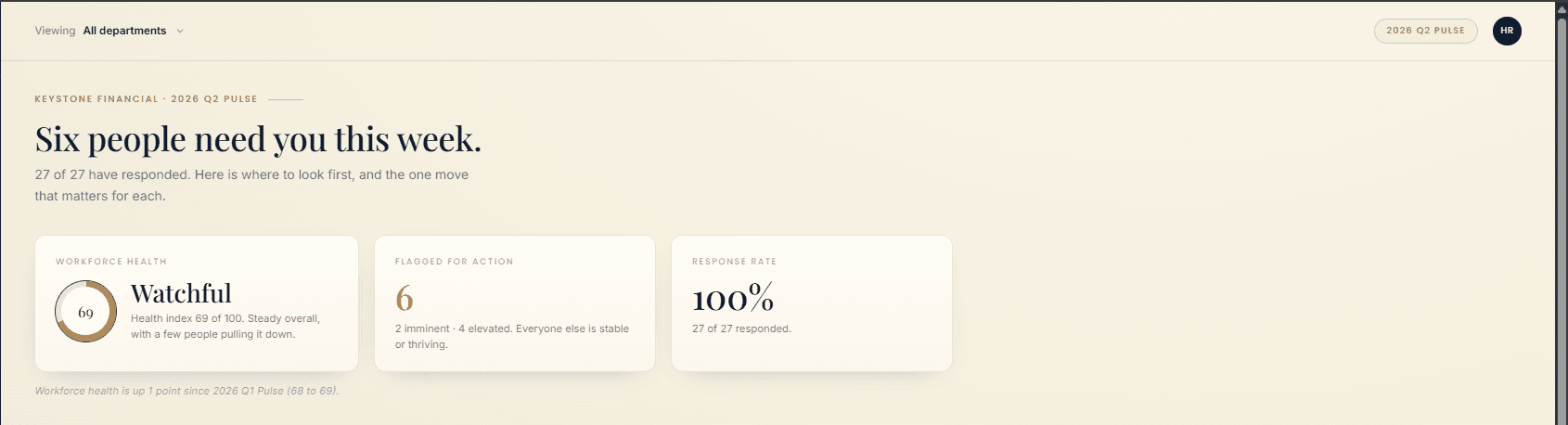
The manager Pulse: the week’s priorities at a glance.
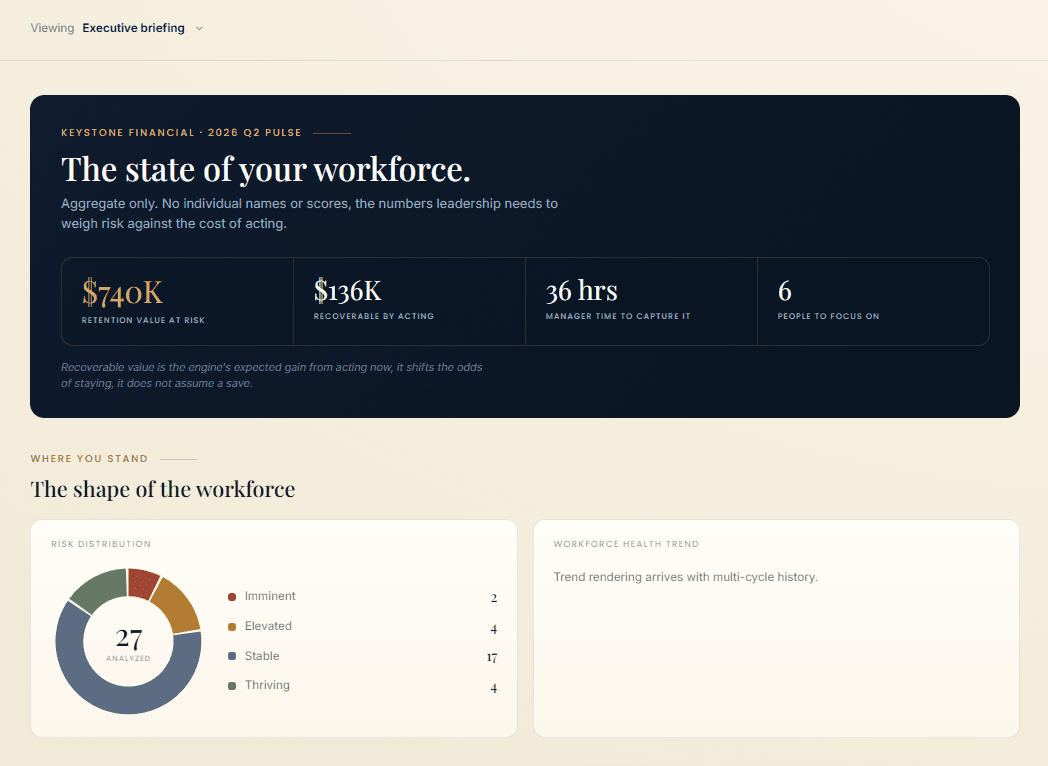
Leadership view: aggregate only, no names, no scores.
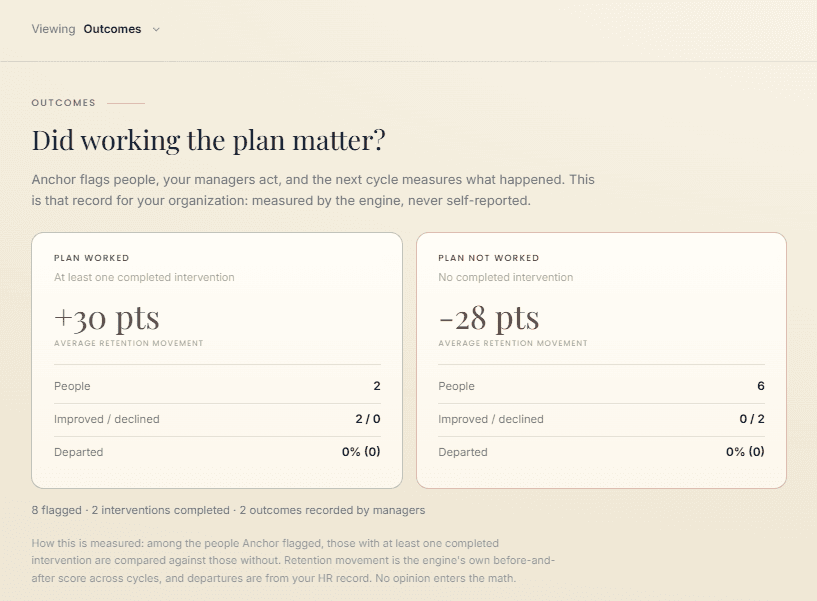
Outcomes: whether working the plan actually moved retention.
Every screen here is the live product on sample data.
Why your people answer honestly
The personality assessment and the raw survey answers are never shown to the manager. No raw scores. No trait numbers. No “here is exactly how Sarah rated you.” Only Pneuma reads the raw responses. Not the manager, not HR, not even us. Only the finished, written analysis reaches the manager.
That firewall is the whole reason people answer honestly. We protect it on purpose. People lie to a tool they don’t trust, and a tool people lie to is worthless. And the plan a manager receives is never used to evaluate them or surfaced to corporate, so it stays a coaching tool, not a report card.
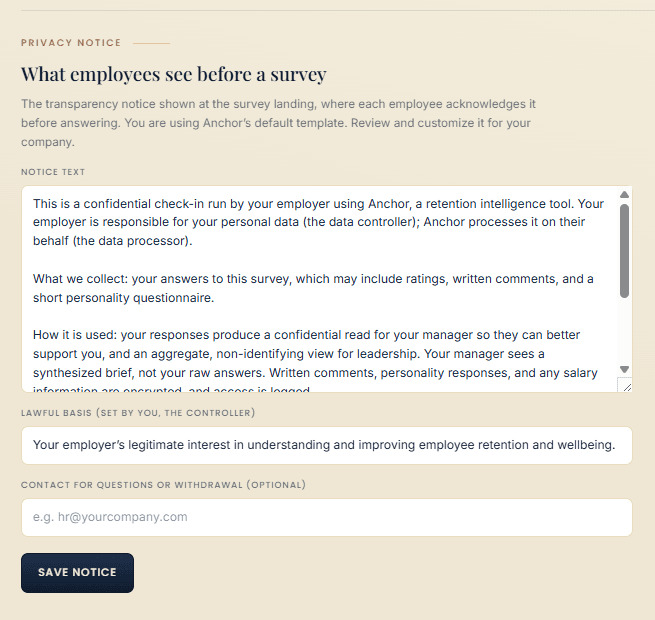
The transparency notice every employee sees and acknowledges before they answer. Yours to customize.
Get Anchor for your team
The fastest way to understand Anchor is to read one finished analysis the way your managers would, first page to final script.
Get Anchor for your teamTwenty minutes. You tell me where you are losing people. I will show you what Anchor would put in front of your managers.